







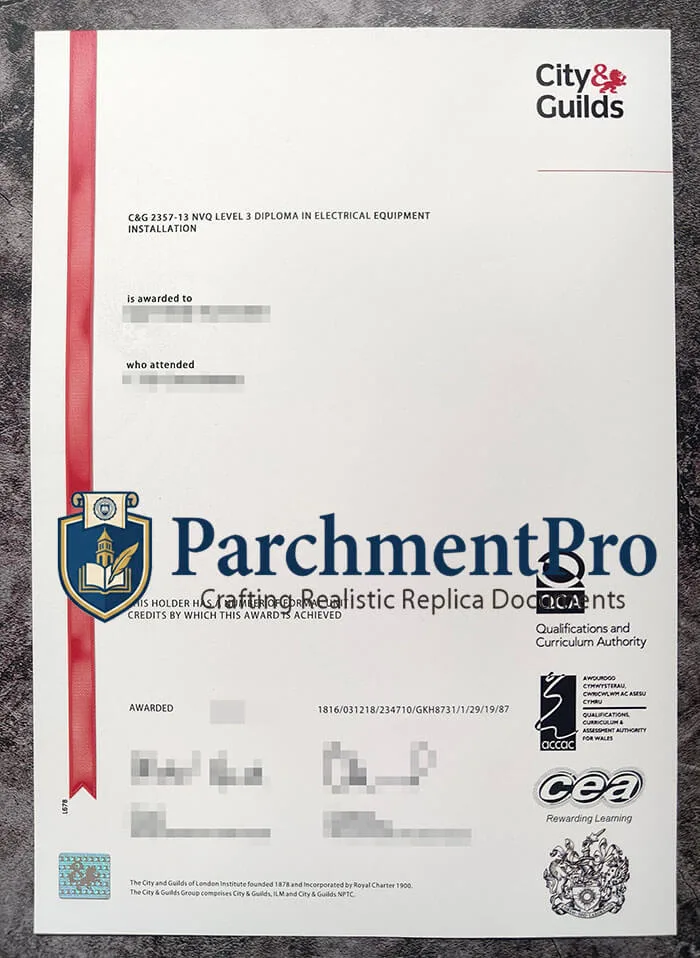
make realistic City & Guilds NVQ Level 3 Diploma
City & Guilds NVQ Level 3 Diploma: A Comprehensive Guide
Introduction
In the landscape of UK vocational education, few qualifications carry as much practical weight and industry respect as the City & Guilds NVQ Level 3 Diploma. Awarded by the City & Guilds of London Institute — one of the most respected awarding bodies for vocational qualifications in the United Kingdom — this qualification serves as a benchmark for technical competence and supervisory capability across a wide range of industries. Unlike traditional academic routes, the NVQ Level 3 Diploma is designed to validate what a learner can actually *do* in the workplace, making it an invaluable asset for professionals seeking to formalise their experience, advance their careers, or transition into supervisory roles.
This article provides a comprehensive overview of the City & Guilds NVQ Level 3 Diploma, exploring its structure, industry applications, assessment methods, career benefits, and progression pathways.
Understanding the NVQ Framework
National Vocational Qualifications (NVQs) are work-based qualifications that assess an individual’s competence in performing job-specific tasks. Within the UK Regulated Qualifications Framework (RQF), an NVQ Level 3 sits at the same academic level as A-Levels, BTEC Nationals, and T Levels. However, while A-Levels focus on theoretical knowledge delivered through classroom-based examinations, NVQs emphasise practical skills and real-world workplace competency. Buy fake UK diploma online.
The NVQ framework is structured across five levels, each reflecting increasing depth of knowledge, autonomy, and responsibility:
Level 1: Foundation — basic tasks, supervised work
Level 2: Basic craft — routine work with some decision-making
Level 3* Technician, advanced craft, supervisor — complex work and supervisory skills
Level 4: Higher technician, middle management
Level 5: Middle to higher management, professional
An NVQ Level 3 is specifically designed for individuals who have developed significant hands-on experience in their field and are ready to take on greater responsibility, potentially supervising others or managing resources.
Industry Sectors Covered
One of the strengths of the City & Guilds NVQ Level 3 Diploma is its breadth of application. City & Guilds operates across ten key sectors, offering over 1,400 programmes of study. The Level 3 Diploma is available in a diverse array of industries, including:
Construction and Utilities: Occupations such as trowel occupations (bricklaying), wood occupations (carpentry and joinery), decorative finishing (painting and decorating), and occupational work supervision. These qualifications are particularly significant as they demonstrate competency against National Occupational Standards and are embedded within Construction Building Apprenticeship Frameworks.
Engineering and Manufacturing: Including electrical installation, engineering maintenance, fabrication and welding, and heating and ventilating systems. The electrical pathway, for instance, is a prerequisite for achieving the JIB Gold Card — the industry’s benchmark for a skilled electrician.
Health and Social Care: Designed for learners working in healthcare support roles, covering areas such as adult nursing, mental health, maternity support, and allied health profession therapy support. The curriculum includes mandatory units on person-centred approaches, communication, safeguarding, health and safety, and equality and diversity.
Hospitality and Catering: Including professional cookery, patisserie and confectionery, and food preparation and cooking specialisms. Level 3 is ideal for experienced chefs aiming to become specialist chefs or move into management roles.
Hair and Beauty: Including hairdressing, barbering, beauty therapy massage, and nail services.
Sales, Marketing, Business and Administration**: Covering customer service, sales, and business administration — roles that require strategic thinking and team leadership.
Travel and Tourism: Providing the practical skills needed for careers as overseas representatives, tour guides, airline and cruise industry reservations agents, and visitor attraction staff.
Qualification Structure
The City & Guilds NVQ Level 3 Diploma is structured around mandatory and optional units. Learners must achieve a minimum number of credits — the exact figure varies by qualification pathway. For example, the Level 3 NVQ Diploma in Hairdressing requires a minimum of 68 credits overall: 43 credits from mandatory units and at least 25 credits from optional units. Similarly, the Extended Diploma in Fabrication and Welding Engineering requires a minimum of 111 credits.
The Total Qualification Time (TQT) also varies significantly by sector. Some examples include:
| Qualification | Guided Learning Hours (GLH) | Total Qualification Time (TQT) |
|—|—|—|
| Decorative Finishing — Painting and Decorating | 536 | 1,230 hours |
| Occupational Work Supervision | 287 | 890 hours |
| Business and Administration | 146 | 400 hours |
| Wood Occupations — Site Carpentry | 321 | 980 hours |
Sources:
The Diploma can be delivered in various study modes, including part-time, full-time, or through flexible fast-track options. Completion times typically range from 6 to 18 months, depending on the learner’s pace, prior experience, and study mode. Some providers offer accelerated programmes that can be completed in as little as 4 to 6 weeks for experienced candidates.
Assessment Methods
The hallmark of NVQ assessment is its work-based, competence-focused approach. Unlike traditional qualifications that rely heavily on written examinations, NVQ assessments are conducted in authentic workplace environments, evaluating a learner’s ability to perform real job tasks to industry standards.
Assessment methods typically include:
Direct Observation: An assessor watches the learner perform tasks in the workplace, assessing their competence against specific criteria.
Portfolio of Evidence: Learners compile a portfolio that documents their work activities, achievements, and reflections, demonstrating how they meet each unit’s requirements.
Professional Discussion: Structured conversations between the assessor and learner to explore and validate knowledge and understanding.
Witness Testimony: Statements from employers, supervisors, or colleagues who have observed the learner’s performance.
Written Assignments and Multiple-Choice Tests: Some qualifications incorporate knowledge assessments to ensure theoretical understanding. For example, the electrical installation pathway (2357-44) assesses knowledge units via Evolve exams through the City & Guilds exam portal, while performance units are assessed through face-to-face workplace observations.
Recognition of Prior Learning (RPL): Learners may receive exemptions from certain units based on prior qualifications or documented work experience.
Importantly, there are no formal examinations for most NVQ qualifications. Assessment is continuous, flexible, and tailored to the individual’s work schedule, making it highly accessible for working professionals.
Career Benefits and Progression
Industry Recognition
City & Guilds NVQ Level 3 Diplomas are widely recognised by employers and sector bodies as a credible alternative to academic qualifications. They serve as a hallmark that assures employers, clients, and customers that the holder possesses a recognised level of competence and understanding of industry working practices. For many trade professions, such as electricians, holding an NVQ Level 3 is an essential requirement for achieving industry-recognised credentials — notably the JIB Gold Card, which unlocks better pay, greater job security, and access to major construction and contracting firms.
Career Advancement and Salary Prospects
Obtaining an NVQ Level 3 Diploma significantly enhances career progression opportunities. Learners can move into senior or supervisory roles, such as team leader, supervisor, or manager, depending on their sector. For health and social care professionals, roles include Senior Care Assistant (£20,000–£25,000), Healthcare Support Worker (£18,000–£22,000), or Care Manager (£25,000–£35,000).
In the electrical industry, qualified electricians can command competitive salaries, with median annual salaries for positions requiring NVQ Level 3 in the City of London reaching £70,000.
Research indicates that individuals with City & Guilds qualifications at Level 3 experience a consistent 6% wage premium over time, and for NVQ achievers, the premium increases to approximately 15% after seven years. For the health and social care sector specifically, certification correlates with a 20% salary increase, a pass rate of approximately 85%, and an employment rate of 90%.
How to make a fake City & Guilds NVQ Level 3 Diploma online?
Further Progression
The NVQ Level 3 Diploma serves as a gateway to higher-level qualifications. Learners can progress to:
Level 4 Diplomas: Such as Salon Management (for hairdressing), Higher Professional Diplomas, or the City & Guilds Level 5 Diploma for Assistant Practitioners in Healthcare.
Level 3 and Higher Apprenticeships: Including Advanced Apprenticeship frameworks in sectors such as hairdressing, sales, construction, and healthcare.
University Programmes: Many universities accept NVQ Level 3 as credit toward degree programmes. Credit transfer is possible, with bridging modules typically required. Some learners may progress into higher education for Foundation Degrees, subject to meeting entry requirements.
Equivalent Qualifications
For those familiar with academic qualifications, it is helpful to understand how the City & Guilds NVQ Level 3 Diploma compares:
| Equivalent | Level | Learning Style |
|—|—|—|
| A-Levels | RQF Level 3 | Classroom-based, examination-focused |
| BTEC Nationals | RQF Level 3 | Coursework and projects, vocational + theory |
| T Levels | RQF Level 3 | Classroom + industry placement |
| Advanced Apprenticeships | RQF Level 3 | Work + training |
| ONC / OND | RQF Level 3 | Vocational, comparable to Level 3 |
Sources:
Conclusion
The City & Guilds NVQ Level 3 Diploma represents a powerful and respected pathway for professionals seeking to formalise their workplace competence and advance their careers. By focusing on what learners can actually *do* rather than what they can memorise, this qualification provides authentic validation of practical skills that employers value. Whether in construction, healthcare, engineering, hospitality, or business, the NVQ Level 3 Diploma opens doors to supervisory roles, higher salaries, and further educational opportunities.
For individuals with significant hands-on experience who are ready to take the next step in their professional journey, the City & Guilds NVQ Level 3 Diploma offers a flexible, work-based route to recognition and advancement — one that is respected by employers and sector bodies across the United Kingdom and beyond.