








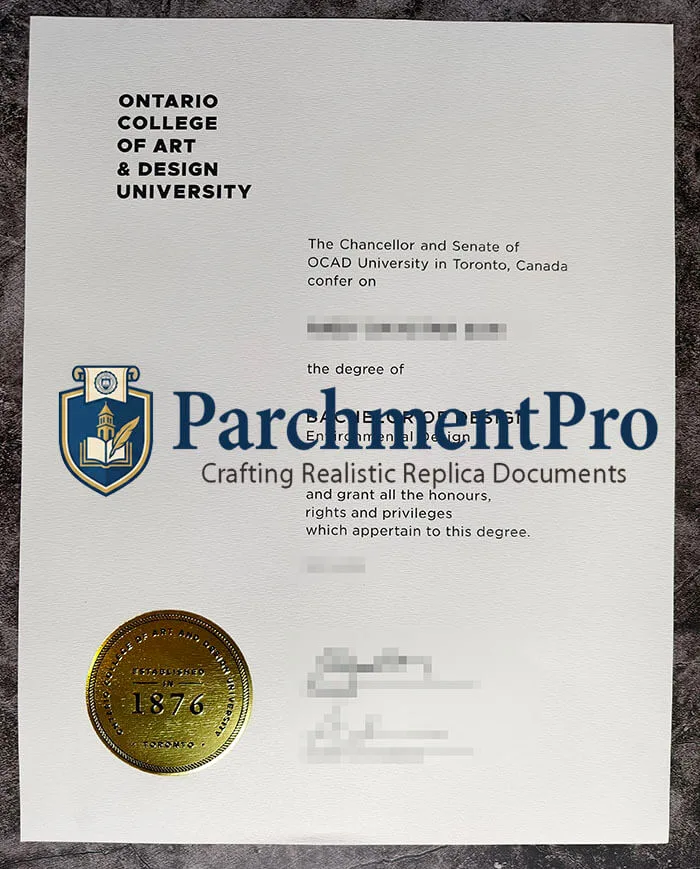
make realistic OCAD University degree
OCAD University: Canada‘s Premier Institution for Art, Design and Creative Innovation
## Introduction
Situated in the heart of downtown Toronto, OCAD University (Ontario College of Art & Design University) stands as Canada‘s oldest, largest and most prestigious university dedicated exclusively to art, design and media education. Since its founding in 1876, the institution has evolved from a modest art school with just fourteen students into a world-class university that shapes the creative landscape not only of Canada but of the entire globe. With over 4,500 students enrolled across seventeen undergraduate and seven graduate programs, OCAD University occupies a unique position at the intersection of traditional studio practice and cutting-edge digital innovation. This article provides a comprehensive exploration of OCAD University, examining its rich historical legacy, academic offerings, iconic campus, international reputation, distinguished alumni, and the unique attributes that make it a global leader in creative education.
Historical Foundations: From Humble Beginnings to University Status
The Founding Years
The story of OCAD University begins on 4 April 1876, when the Ontario Society of Artists established the Ontario School of Art in Toronto. This modest institution, which opened with just fourteen registered students, was Canada‘s first school dedicated exclusively to educating professional artists. Over the ensuing decades, the institution underwent several name changes — becoming the Toronto Art School (1886–90), then the Central Ontario School of Art and Industrial Design (1890–1912) — before being incorporated as the Ontario College of Art (OCA) in 1912. Buy fake Canada diploma online.
Growth and Transformation
The mid-twentieth century marked a period of significant expansion. In 1945, the college broadened its curriculum with the opening of the Design School, formally recognising the growing importance of design in visual arts education. This recognition culminated in a pivotal name change in 1996, when the institution became the Ontario College of Art & Design (OCAD), formally acknowledging the integral role of design alongside fine art.
Perhaps the most transformative milestone came in 2002, when OCAD was granted university status, enabling it to confer its own Bachelor of Fine Art (BFA) and Bachelor of Design (BDes) degrees. This elevation to university status reflected the institution‘s maturation as a centre of advanced learning and research. In 2008, OCAD accepted its first cohort of graduate students, and by 2009, it had launched continuing education programs. To reflect these momentous changes, the institution adopted its current name — OCAD University (OCAD U) — in 2010.
Where to make a realistic OCAD University online?
Acknowledging Indigenous Lands
In keeping with contemporary commitments to reconciliation and equity, OCAD University formally acknowledges that its campus sits on the ancestral and traditional territories of the Mississaugas of the Credit, the Haudenosaunee, the Anishinaabe and the Huron-Wendat, who are the original owners and custodians of the land. This acknowledgment is not merely ceremonial; decolonisation, social justice and sustainability serve as guiding principles across the university‘s academic and administrative operations.
Academic Excellence: Programs, Faculties and Degrees
Three Academic Faculties
OCAD University‘s academic structure is organised around three faculties: the Faculty of Art, the Faculty of Design, and the Faculty of Arts & Science. This tripartite organisation reflects the institution‘s commitment to interdisciplinary learning that bridges studio practice with critical inquiry.
The Faculty of Art offers programs in Drawing & Painting, Experimental Animation, Integrated Media (including Life Studies), Photography, Printmaking & Publications, Sculpture/Installation, and Indigenous Visual Culture. These programs emphasise hands-on studio learning while nurturing conceptual development and critical thinking.
The Faculty of Design encompasses Advertising, Environmental Design, Graphic Design, Illustration, Industrial Design, Material Art & Design, and Digital Futures. These programs prepare students for careers that demand both creative vision and practical problem-solving skills.
The Faculty of Arts & Science provides the Liberal Arts courses that every student undertakes, alongside five dedicated degree programs. Grounded in principles of decolonisation, social justice and sustainability, this faculty offers instruction across global studies of art and design history, social sciences, humanities, business, science and technology.
Undergraduate Programs
OCAD University offers seventeen undergraduate programs, all of which are four years in length. Upon graduation, students earn either a Bachelor of Arts (BA), a Bachelor of Design (BDes) or a Bachelor of Fine Arts (BFA). The full complement of undergraduate offerings includes:
| Program | Degree | Faculty |
|—|—|—|
| Advertising | BDes | Design |
| Creative Writing | BFA | Arts & Science |
| Criticism & Curatorial Practice | BFA | Arts & Science |
| Digital Futures | BDes or BFA | Design |
| Drawing & Painting | BFA | Art |
| Environmental Design | BDes | Design |
| Experimental Animation | BFA | Art |
| Graphic Design | BDes | Design |
| Illustration | BDes | Design |
| Indigenous Visual Culture | BFA | Art |
| Sculpture/Installation | BFA | Art |
| Industrial Design | BDes | Design |
| Integrated Media | BFA | Art |
| Material Art & Design | BDes or BFA | Design |
| Photography | BFA | Art |
| Printmaking & Publications | BFA | Art |
| Visual & Critical Studies | BA | Arts & Science |
Sources:
The first year of each program combines 3.5 credits of studio work with 1.5 credits of Liberal Studies courses. The studio curriculum consists of four required courses — Drawing, Colour Exploration, Form & Structure, and Time-Based Media — alongside two elective courses, ensuring a strong foundational grounding before students specialise.
Graduate Programs
OCAD University offers seven graduate programs, including master‘s degrees in Art, Design, Media Studies, and Strategic Foresight & Innovation, as well as interdisciplinary master’s programs. Graduate offerings also extend to programs in Art History, Museum Studies and Cultural Studies, providing advanced pathways for students seeking careers in academia, curation and cultural leadership.
First-Year Experience and Studio-Based Learning
The hallmark of an OCAD education is its studio-based learning environment. Small class sizes ensure personalised attention from faculty members who are themselves practising artists and designers. The first-year curriculum is designed to immerse students in foundational studio practices while simultaneously introducing them to the critical frameworks necessary for sophisticated creative work. As the university’s course catalogue notes, students engage with technical, critical and conceptual knowledge, materials and frameworks through hands-on exploration.
Experiential Learning and Industry Connections
OCAD University maintains over four hundred industry partners, offering students extensive experiential learning opportunities through field placements, internships and professional practice courses. The Experiential Learning Program provides a continuous approach to bridging formal studies with professional, personal and civic growth, responding to the individuality of each student‘s needs and goals through guided self-reflection and critical action. This emphasis on real-world engagement ensures that graduates emerge not only with creative proficiency but also with the professional networks and practical experience necessary for meaningful creative careers.
The Campus: An Architectural and Cultural Landmark
Location in Toronto’s Creative Corridor
OCAD University‘s campus is located in the Queen West neighbourhood of downtown Toronto, next to Grange Park and the Art Gallery of Ontario, and just steps away from the Entertainment District and one of the world‘s coolest streets. Toronto itself is Canada‘s cultural capital, boasting one of the largest concentrations of visual artists, designers and entertainment professionals in North America, with more than forty thousand working designers and the third largest concentration of visual artists and entertainment professionals on the continent. This vibrant urban context provides students with unparalleled access to galleries, museums, festivals, design studios and tech startups.
The Rosalie Sharp Centre for Design
No discussion of OCAD University would be complete without acknowledging its most celebrated architectural feature: the Rosalie Sharp Centre for Design. Opened in 2004 as part of a major $42.5-million campus redevelopment, this iconic black-and-white structure is widely regarded as one of the most visually arresting buildings on any Canadian campus.
Designed by acclaimed British architect Will Alsop in partnership with Toronto-based Robbie/Young + Wright Architects, the Sharp Centre appears as a two-storey rectangular volume suspended above the main campus building on twelve brightly coloured, one-hundred-foot steel legs. This playful “tabletop” design, sometimes described as a “checkerboard in the sky,” won the Royal Institute of British Architects Worldwide Award and was praised as “courageous, bold and just a little insane”.
The building houses new art studios, lecture theatres, exhibit spaces and faculty offices, specifically accommodating programs in Environmental Design, Industrial Design, Illustration, Advertising and Graphic Design. Beyond its functional role, the Sharp Centre has become a beloved Toronto landmark, sparking the city‘s architectural renaissance and remaining fresh and inspiring to this day.
Campus Facilities and Resources
Beyond the Sharp Centre, OCAD University‘s growing footprint encompasses twelve buildings in the heart of the city. Students have access to over twenty unique shops and studios, ranging from digital fabrication laboratories equipped with laser cutters, 3D printers and CNC machines to sound laboratories, VR/AR experience centres, photography darkrooms, motion-capture studios and animation rendering farms.
The university also operates six public galleries that exhibit work by students and internationally recognised professional artists and designers. Additionally, OCAD U LiVE — a production house and digital streaming channel housed in a street-front studio within the TIFF Lightbox building — provides students with professional lighting equipment and a full suite of recording and editing tools, enabling them to produce broadcast-quality content.
State-of-the-art facilities extend to the Waterfront Campus, which houses the OCAD U CO Futures design studio for industry and business collaboration, as well as research centres such as the Cultural Policy Hub, the Global Centre for Climate Action and the renowned Inclusive Design Research Centre.
International Reputation and Rankings
OCAD University is consistently recognised as Canada‘s leading institution for art and design education. According to the QS World University Rankings by Subject, OCAD University has consistently placed among the top art and design schools globally. In the 2024 QS rankings, the university was placed in the 51–100 band worldwide for Art & Design, ranking as the top institution in Canada alongside Emily Carr University of Art + Design.
Beyond ranking metrics, OCAD University‘s reputation rests on substantive achievements: it is Canada‘s oldest and largest university for art, design and media; it offers more depth and breadth in art and design course offerings than any other institution in Canada; and it has produced generations of artists and designers who have shaped Canada‘s visual culture and design environment. The university is often described by the nickname “Canada’s Imagination University” — a reflection of its motto, “Imagination is Everything,” and its commitment to cultivating creative vision as the foundation of all artistic and design practice.
Students at OCAD University come from over one hundred countries around the world, creating a richly diverse learning community. Upon graduation, students enjoy a ninety-percent employment rate, with graduates working in sectors as diverse as animation, environmental design, film, gaming, graphic design, illustration, interior design, publishing, urban planning and visual arts.
Distinguished Alumni: Shaping Canadian and Global Culture
The list of OCAD University‘s distinguished alumni reads like a who’s who of Canadian and international art and design.
Historical Icons
Most members of the Group of Seven — Canada‘s most celebrated collective of landscape painters — either studied at, taught at or served as presidents of OCAD University. Esteemed artists such as G.A. Reid and J.E.H. MacDonald have led the institution, and luminaries including A.Y. Jackson, Arthur Lismer and A.J. Casson have walked its halls. Filmmaker George Dunning, best known for directing the Beatles’ animated classic *Yellow Submarine*, studied at OCAD, as did Floria Sigismondi, whose music videos and films have defined visual culture for decades.
Visual artists such as Michael Snow — creator of the Toronto Eaton Centre‘s iconic *Flight Stop* geese installation — and Ken Danby, whose painting *The Goalie* is among the most recognisable works in Canadian art, both began their journeys at OCAD University. The creative directors at most of Canada‘s top advertising agencies are OCAD graduates, a testament to the university’s enduring influence on commercial visual culture.
Design and Illustration
Designer Don Watt, whose logo designs for Home Depot, No Name and President‘s Choice have become part of everyday life for millions of consumers, is an OCAD graduate. Pulitzer Prize-winning illustrator Barry Blitt and Order of Canada recipient Anita Kunz — whose iconic covers have appeared on *The New Yorker*, *Vanity Fair* and *Rolling Stone* — both honed their craft at OCAD University.
Contemporary Alumni
Contemporary OCAD alumni continue to push creative boundaries. Graeme McMillan (Industrial Design, 1999) rose from sketching sneakers in high school to leading footwear design in Portland, following early encouragement from Nike. Madelaine Fischer-Bernhut (Digital Futures, 2021) works as a Senior Technical Artist at Ubisoft Toronto, creating physics and destruction effects for major game titles including *Assassin‘s Creed Shadows*. Delali Cofie (Photography, 2024) explores storytelling, family and identity through fine art, documentary and commercial photography, often shooting on film. Michael Belmore, an Anishinaabe sculptor, creates work shaped by copper, stone and other natural materials, reflecting a deep connection to land, history and cultural identity.
Sharene Shafie earned her Master’s in Strategic Foresight and Innovation and now serves as Project Lead for the City of Toronto‘s Climate Action Team, demonstrating how design thinking can address urgent social challenges. Danielle Kim (Environmental Design, 2016) brings her passion for functional design to life at RioCan, guided by the principle that “form follows function” — a principle she learned during her OCAD education. Ali Mapara (Industrial Design, 2018) created the first design for Movemate as his final thesis project, illustrating how OCAD’s project-based learning launches real-world ventures.
Pioneering Achievements
Dorothy Henriques-Wells, who graduated in 1950, became the first Black alumnus of OCAD University (then the Ontario College of Art) and later taught art in Jamaica for more than two decades. In 2024, OCAD University announced honorary degree recipients including internationally renowned media artists Janet Cardiff and George Bures Miller, as well as mixed-media artist Michael Massie, whose distinguished career reflects his mixed Inuit, Métis and Scottish heritage.
Application and Admissions
Portfolio Requirements
Admission to OCAD University‘s undergraduate programs is based primarily on the strength of the applicant’s portfolio or supplemental application materials. Applicants are typically required to submit eight to ten art or design pieces demonstrating a variety of work, along with a sketchbook or process work documenting their research, development and inspiration. A statement of intent of 250 to 300 words explains the applicant‘s interest in the program and their creative background. (Notably, the Visual & Critical Studies BA program requires a writing sample rather than a portfolio.)
Academic Requirements
Applicants must complete a total of six Grade UU or M level courses with a minimum academic average of 70 percent, including ENG4U. All offers of admission are conditional upon meeting minimum academic requirements and supplying all required documentation.
Language Proficiency
For international applicants, the required language proficiency is an IELTS score of 6.5 overall with no band below 6.0, or a TOEFL score of 90 with a minimum of 22 in writing for undergraduate programs. Graduate programs require IELTS 7.0 (minimum 6.5 per band) or TOEFL 100 (minimum 22 in writing).
Application Timeline
Undergraduate applications are due by 15 January, with rolling admissions thereafter (early application is strongly recommended). Graduate applications are typically due by 1 December, though some programs extend to 15 January.
Tuition
For international students, undergraduate tuition ranges from approximately C$28,000 to C$35,000 per year, while graduate tuition ranges from C$25,000 to C$40,000 per year.
Conclusion
OCAD University stands as a monumental institution in Canadian — and indeed global — creative education. From its humble beginnings in 1876 with fourteen students to its current status as Canada‘s oldest, largest and leading art and design university, OCAD has remained faithful to its founding mission while continuously evolving to meet the demands of a rapidly changing world.
What distinguishes OCAD University from other institutions is not merely its longevity or its rankings, but its unique character: a place where studio-based tradition meets digital innovation, where critical inquiry complements creative practice, where faculty members are practising professionals, and where the urban energy of downtown Toronto serves as an extended classroom and laboratory. The university‘s motto — “Imagination is Everything” — captures an essential truth about creative education: technique can be taught, but imagination must be cultivated, nurtured and liberated.
For students seeking a transformative education that bridges art, design and media within a supportive yet demanding environment, OCAD University offers an unparalleled experience. Its graduates do not simply enter the workforce; they shape culture, drive innovation, challenge conventions and imagine better futures. As the university enters its second century and a half of creative education, OCAD University remains at the forefront of its field, Canada‘s imagination university in a world that has never needed imagination more.